If you’re asking this question, my honest answer is: probably yes, and it’s probably bigger than anyone around you realizes.
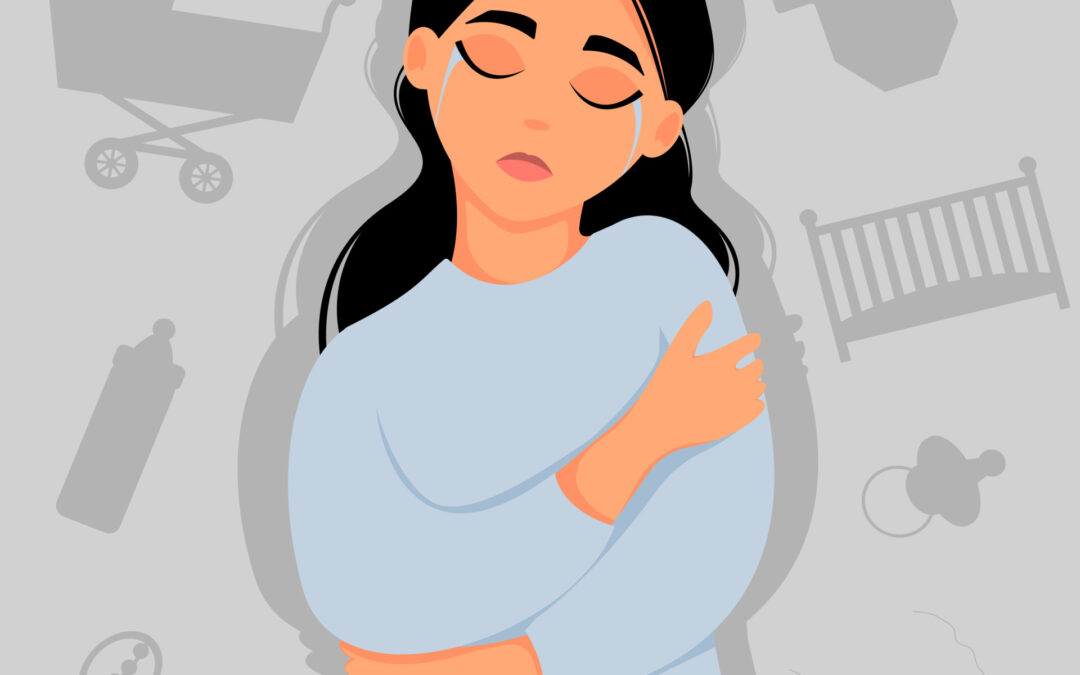
Miscarriage is strange in that it’s both extremely common and extremely under-discussed. It happens in an estimated 15 to 20 percent of known pregnancies [1], which means most people in your life either know someone who’s been through it or have been through it themselves. And yet very few people talk about it out loud, which means when it happens to you, it can feel like you’re the only one, and like you have to figure out on your own how much grief you’re “allowed” to have.
You’re allowed to have all of it.
The Grief Is Not Proportional to How Far Along You Were
One of the most common things I hear is some version of, “I was only eight weeks, so I feel silly being this upset.” Gestational age doesn’t determine how much you’d already imagined, planned, hoped, or attached. If you’d started thinking about names, due dates, how you’d tell your family, that loss is real regardless of a number on an ultrasound. Grief follows attachment, not gestational timelines.
This Isn’t “Just” Grief. For Many People, It’s Trauma
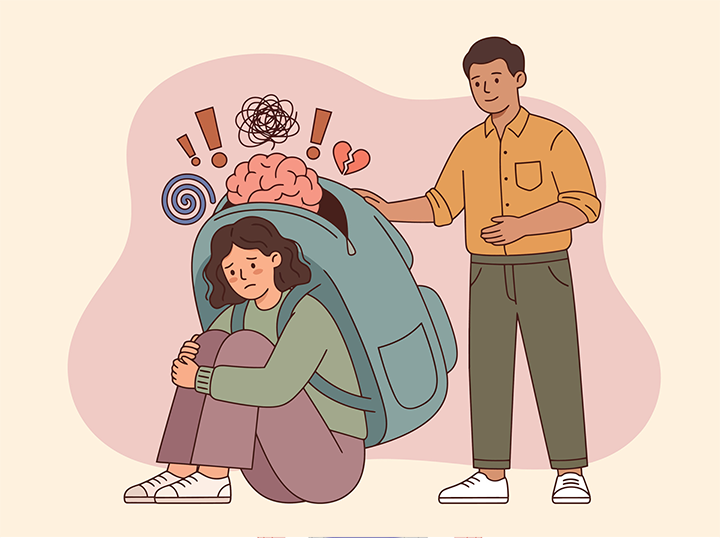
Miscarriage sits at an intersection that a lot of people, including some well-meaning doctors, don’t fully appreciate: it’s grief, but it can also be trauma, and the two show up differently. Research pooling data across studies found that within six weeks of a loss, roughly a third of people experience clinically significant anxiety, close to a third experience depression, and about a third report significant traumatic stress [2]. Separately, several large studies have found that somewhere between a quarter and 40 percent of women meet diagnostic criteria for PTSD within one to three months of an early pregnancy loss [3][4].
That’s not “sad for a while.” That’s a nervous system responding to something genuinely traumatic. If you’re having intrusive memories of the moment you found out, avoiding your doctor’s office, feeling numb, or startling easily, those are trauma responses, not signs you’re handling this badly.
Your Partner Is Probably Grieving Differently Than You
This one catches a lot of couples off guard. It’s common for one partner to want to talk about the loss constantly and the other to go quiet, and for each to interpret the other’s coping style as a lack of caring. Research on partners, including male partners, shows real and sometimes clinically significant grief, anxiety, and depression, even when it doesn’t look the way we expect grief to look [5]. Quiet isn’t always absence of feeling. Sometimes it’s a different shape of the same feeling.
If this mismatch is creating distance between you and your partner right now, on top of everything else, I’ve written more about navigating that specific dynamic here: The Emotional Toll of Infertility on a Marriage and Managing Relationship Stress During Infertility.
There’s No Fixed Timeline, and Satisfaction With Your Care Matters
Grief after miscarriage doesn’t follow a tidy arc. For some people, symptoms fade over months. For others, research shows grief can persist for years, sometimes resurfacing during a later pregnancy [6]. One detail from the research that I think deserves more attention: people who felt dismissed or unsupported by their medical care during the loss were more likely to still be carrying significant grief symptoms two years later [7]. In other words, how you were treated in that moment matters, and if it wasn’t handled well, your ongoing grief isn’t a personal failing, it’s a reasonable response to inadequate support.
What Actually Helps
- Say what you’re grieving, specifically. Not just “the pregnancy,” but the due date you’d started picturing, the name you’d tried out, the version of this year you’d imagined. Naming it makes it easier to carry.
- Let the timeline be nonlinear. You may feel okay for weeks and then be flattened by a random Tuesday. That’s not backsliding, that’s how grief actually moves.
- Watch for the trauma symptoms, not just the sadness. Intrusive memories, avoidance, hypervigilance, and emotional numbness are treatable, but they need to be named to be addressed. A generalist approach that treats this as grief alone can miss what’s actually happening underneath.
- Be cautious with “at least” statements, from others and from yourself. “At least you can get pregnant” or “at least it was early” minimizes something that doesn’t need minimizing.
- Get support that’s specific to reproductive loss, not just general grief counseling. The clinical picture here, the overlap of grief, trauma, and sometimes depression, benefits from someone who knows this territory.
If you’re also managing the infertility piece of this, alongside the loss, this may help too: Coping Strategies for Infertility and Understanding Infertility: You’re Not Alone.
If This Grief Is Turning Into Something You Can’t Shake
If it’s been weeks and you’re finding it hard to get through a day, if you’re avoiding things that used to feel normal, or if you’re not sure whether what you’re feeling is grief or something that’s tipped into depression, that’s worth talking to someone about. I wrote about how to tell the difference here: How Do I Know When I’m Depressed?
I’m Jill Giuliano, LCSW. I’m a therapist practicing in my office in Westfield, New Jersey and virtually in New Jersey, Pennsylvania and Indiana, and reproductive loss is one of the areas I sit with people in most often. You don’t have to justify how big this feels to anyone, including yourself. If you’re in it right now, email me or call (908) 232-4044, and we can talk about what support could look like.
Read more on this topic: How Do I Recover From a Failed IVF Cycle? and Why Support Matters During Infertility Treatments
References
[1] Springer Nature, Middle East Current Psychiatry. (2026). Miscarriage as a psychological trauma: a comprehensive review of psychiatric sequelae and clinical implications. https://link.springer.com/article/10.1186/s43045-026-00641-2
[2] Phoenix Health. (2026). Miscarriage and Pregnancy Loss Statistics: Key Facts. https://joinphoenixhealth.com/resourcecenter/pregnancy-loss-miscarriage-statistics/
[3] PTSD UK. PTSD following pregnancy loss. https://www.ptsduk.org/what-is-ptsd/causes-of-ptsd/pregnancy-loss/
[4] Tommy’s. Pregnancy after loss and coping with PTSD. https://www.tommys.org/baby-loss-support/stories/pregnancy-after-loss/pregnancy-after-loss-and-coping-ptsd
[5] Springer Nature, Middle East Current Psychiatry. (2026). Miscarriage as a psychological trauma: partner and paternal outcomes. https://link.springer.com/article/10.1186/s43045-026-00641-2
[6] American Psychological Association. (2024). The hidden grief of miscarriage. https://www.apa.org/monitor/2024/06/hidden-grief-miscarriage
[7] American Psychological Association. (2024). The hidden grief of miscarriage. https://www.apa.org/monitor/2024/06/hidden-grief-miscarriage