By Jill Giuliano, LCSW | Anxiety Therapy in Westfield, NJ
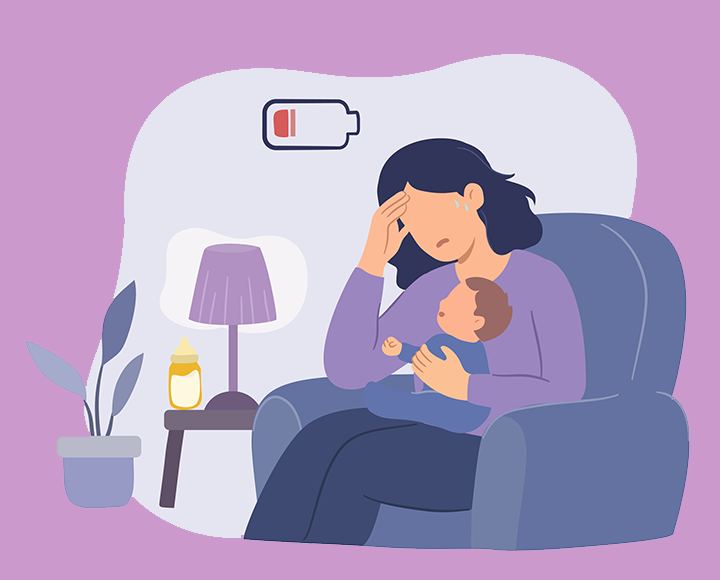
You’re holding your newborn and out of nowhere, a horrifying thought flashes through your mind. You’re driving over a bridge and your brain offers up something you immediately wish it hadn’t. You’re in the middle of an important meeting and suddenly you’re thinking something wildly inappropriate about your boss.
And then comes the second wave, the one that’s often worse than the thought itself.
What is wrong with me?
Here’s what I want you to know: probably nothing. Intrusive thoughts are one of the most common and most misunderstood features of anxiety. And the fact that the thought horrified you? That’s actually a really important piece of information.
What Are Intrusive Thoughts?
Intrusive thoughts are unwanted, involuntary thoughts, images, or impulses that pop into your mind without warning. They can be disturbing, violent, sexual, or just plain bizarre. And they tend to feel completely at odds with who you are and what you value.
That last part is key.
Research tells us that the vast majority of people, anxious or not, experience intrusive thoughts from time to time. The difference is what happens next. For people with anxiety, the brain doesn’t let the thought pass. It grabs it, shakes it, examines it from every angle, and asks: But what if it means something?
And that’s where the real suffering begins.
Why Anxious Brains Get Stuck on Intrusive Thoughts
Think of your brain as a very enthusiastic security guard whose job is to keep you safe. Most of the time, that guard is helpful. But anxiety cranks the guard’s sensitivity way up, so they start flagging things that aren’t actually threats.
When an intrusive thought appears, your anxious brain treats it like a five-alarm fire. We need to figure this out. We need to make sure you’re not a bad person. We need to understand why you thought that.
The cruel irony? The more you try to analyze the thought, suppress it, or convince yourself it doesn’t mean anything, the louder it gets. This is sometimes called the “white bear problem.” If I tell you not to think about a white bear, what’s the first thing you think about?
Exactly.
What Intrusive Thoughts Are NOT
This is important, so I’m going to say it plainly.
Having an intrusive thought does not mean:
- You secretly want to do the thing you thought about
- You are a bad person, a bad parent, or a bad partner
- You are dangerous
- You are “going crazy”
- The thought is a sign or a premonition
In fact, people who are genuinely disturbed by their intrusive thoughts, people who find them upsetting and ego-alien, meaning the thought feels completely foreign to who they are, are almost never the people who would act on them. The distress is the point. It’s your brain’s way of saying: this matters to me.
So What Can You Do?
The goal isn’t to never have intrusive thoughts. That’s not a realistic target, and chasing it usually makes things worse. The goal is to change your relationship with the thoughts, so they stop having so much power over you.
A few things that actually help:
Notice without engaging. When a thought appears, try to observe it rather than analyze it. “There’s that thought again” is very different from “Why did I think that? What does it mean? Am I a terrible person?” One puts you in the role of observer. The other feeds the loop.
Stop trying to disprove the thought. Seeking reassurance, from yourself or others , feels like relief, but it’s a short-term fix that makes anxiety stronger over time. The goal isn’t to convince yourself the thought isn’t true. It’s to be able to let it exist without needing to resolve it.
Recognize the anxiety, not the content. The thought itself isn’t the problem. The anxiety attached to it is. When you start to see intrusive thoughts as a symptom of an overactive nervous system, rather than a message about your character, they lose a lot of their grip.
When to Get Help
If intrusive thoughts are taking up significant space in your day, if you’re avoiding situations to prevent them, spending a lot of time seeking reassurance, or feeling real distress about who you are because of them, it’s worth talking to someone.
This is very treatable. Therapy, particularly cognitive behavioral approaches, can help you understand what’s driving the thoughts and build a different relationship with them. You don’t have to keep white-knuckling it on your own.
Does this sound familiar to you? Reach out here, or give me a call at (908) 232-4044. We’ll have a zero pressure chat about what you’re experiencing and how I can help.
You’re not as alone in this as you think.
If you found this article interesting, maybe you’d like to read more topics like Why Avoidance Makes Anxiety Worse, Why Anxiety Gets Worse At Night and What your Body is Trying to Tell You About Your Anxiety
Jill Giuliano, LCSW is a therapist in Westfield, NJ specializing in anxiety, infertility, grief, and couples therapy. She has been in private practice since 2004.