By Jill Giuliano, LCSW | Anxiety Therapist in Westfield, NJ
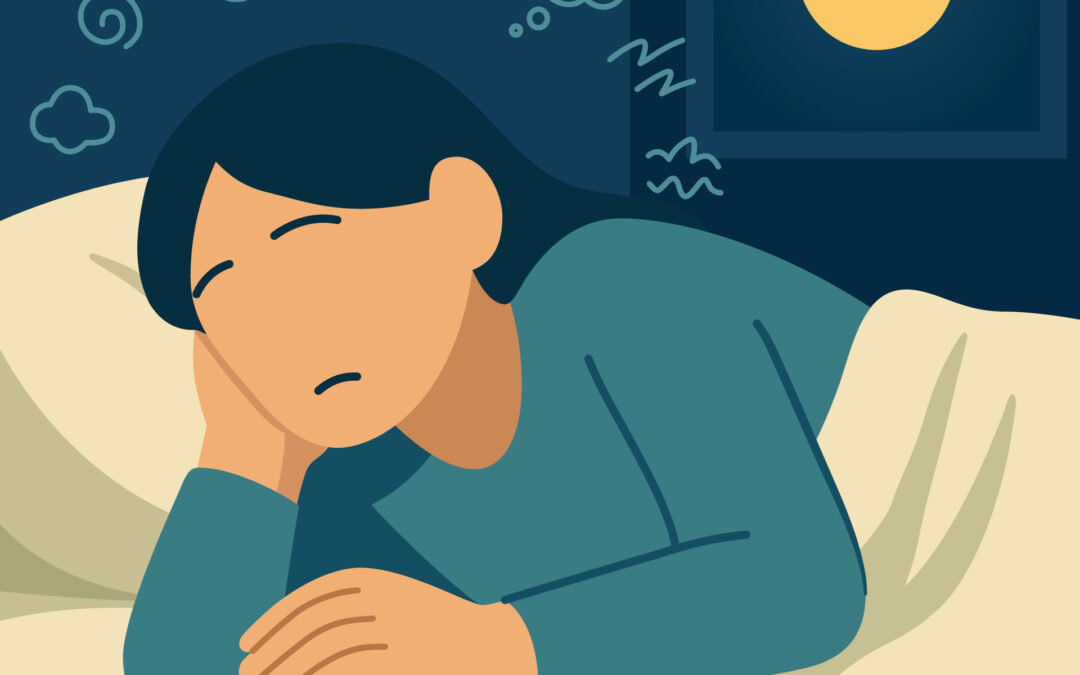
You’re fine all evening. You make dinner, help with homework, answer a few last emails. Then you finish your nighttime routine, turn off the lights, and lie down, and that’s exactly when it hits. Not at 2am. Not in the middle of the night. Right at the moment you stop moving. If your anxiety seems to switch on the second you get into bed, this is about that specific moment, and why your brain picks it every single time.
Lying Down Is a Signal, Not Just a Position
Your body reads physical stillness as a cue. All day, movement, tasks, and conversation keep you in “doing” mode. The moment you lie down and go still, your brain gets the signal that it’s finally safe to stop performing, and that’s exactly when it starts processing everything you didn’t have time to feel earlier. For many people with anxiety, that shift from active to still doesn’t feel calming, it feels like opening a door you spent all day holding shut.
The Wind-Down Window Is Uniquely Vulnerable
There’s a specific window, roughly the last 15 to 30 minutes before you actually fall asleep, where your brain is winding down but not yet asleep. You’re not busy enough to stay distracted, but not unconscious enough to escape your thoughts either. This is different from waking up anxious at 2am or 4am, which tends to be driven by fragmented sleep cycles and involuntary waking. The pre-bed spike is about the transition itself, the specific in-between state where your mind has nothing left to do but think.
Your To-Do List Waited All Day for This Moment
Ironically, the more responsible and on-top-of-things you are during the day, the worse this moment can hit. If you’re the type to push worries aside so you can function, “I’ll deal with that later” quietly stacks up all day. Bedtime is often the first time “later” actually arrives. Tomorrow’s meeting, the email you forgot to send, the comment that felt off, all of it has been waiting for a quiet moment to surface, and lying down is usually the first quiet moment you’ve had all day.
You Can’t Skip the Transition, But You Can Shape It
Because this is about the transition into stillness rather than sleep itself, the most effective fix isn’t a sleep hack, it’s a buffer. Give your brain a deliberate off-ramp between “busy day” and “lying in bed,” instead of going straight from screen or task to horizontal. A short wind-down routine, even five or ten minutes of something low-stimulation like journaling, stretching, or simply sitting quietly before you get into bed, gives your mind a chance to downshift gradually instead of hitting stillness at full speed.
Writing down tomorrow’s loose ends before you lie down can help too. It’s not about solving them, it’s about telling your brain the thought has been captured somewhere else, so it doesn’t need to hold onto it while you’re trying to fall asleep.
When It’s More Than a Routine Problem
If this pattern is happening most nights and no amount of wind-down routine seems to touch it, that’s usually a sign the anxiety itself needs attention, not just the fifteen minutes before bed. A routine can smooth the transition, but it won’t resolve anxiety that’s been building all day with nowhere else to go.
You Don’t Have to Dread That Moment Every Night
If getting into bed has started to feel like flipping a switch you can’t control, that’s worth talking through with someone, not just managing alone every night. Therapy can help you understand what’s surfacing in that quiet moment and build a way through it that doesn’t rely on staying busy enough to outrun it.
If you’d like to read more about anxiety, check out these posts:
- Why Anxiety Gets Worse at Night
- How to Interrupt the Spiral of Anxiety
- What Your Body Is Trying to Tell You About Your Anxiety
Does this sound or feel familiar to you? Email me or call (908) 232-4044, and we can have a zero pressure chat about getting you started on something better.