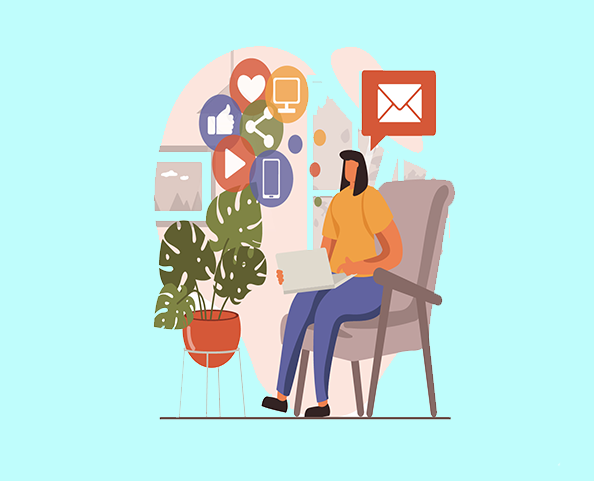
We’ve all been there: you pick up your phone to check Instagram for “just a minute,” and suddenly it’s an hour later. Your shoulders are tense, your mood has shifted, and you’re feeling… off. If this sounds familiar, you’re not alone—and there’s a growing body of evidence showing that our social media habits might be making us more anxious.
The Comparison Trap
Social media is essentially a highlight reel. Your college friend posts about their promotion, your neighbor shares photos from an exotic vacation, and that acquaintance from high school seems to have the perfect family. Meanwhile, you’re sitting in sweatpants wondering why your life doesn’t measure up.
The problem is, you’re comparing your behind-the-scenes reality to everyone else’s carefully curated performance. Research has consistently shown this pattern: a 2017 study published in the American Journal of Preventive Medicine found that young adults who used social media most frequently were more than twice as likely to report elevated anxiety symptoms compared to those who used it less.¹ It’s like judging your everyday appearance against people who’ve spent two hours getting ready for a photo shoot. This constant comparison can leave you feeling inadequate, anxious about your own choices, and worried that you’re somehow falling behind in life.
The Never-Ending News Cycle
Social media also bombards us with an endless stream of information—much of it negative. Algorithms have learned that we’re more likely to engage with content that triggers strong emotions, particularly fear and outrage. So your feed fills up with crisis after crisis, controversy after controversy, leaving you feeling like the world is spinning out of control.
Our brains weren’t designed to process this volume of information, especially not the bad news from around the entire world all at once. A study from the Pew Research Center found that many Americans report feeling worn out by the constant flow of news on social media, with this “news fatigue” linked to higher stress levels.² It’s exhausting, and it keeps our stress response activated far more than is healthy.
The Validation Treadmill
Then there’s the likes, comments, and shares—those little dopamine hits that keep us coming back. When a post does well, we feel great. When it doesn’t, we might feel rejected or worry about what people think of us. We start crafting our lives for an audience rather than living authentically, which creates a new kind of performance anxiety.
Research from the University of Pennsylvania found that limiting social media use to 30 minutes per day led to significant reductions in anxiety and depression, particularly decreasing feelings of loneliness and fear of missing out (FOMO).³ The validation-seeking behavior that platforms encourage can become a cycle that’s hard to break.
What You Can Do
The good news is that awareness is half the battle. Try setting time limits on your social media apps, curating your feed to include more positive content, and taking regular breaks. Remember that social media is a tool—and like any tool, it works best when you’re in control of how you use it, rather than the other way around. Your mental health is worth more than any number of likes or followers.
If you feel like your anxiety is getting in the way of how you live your life, therapy with a trained professional can help you develop ways of managing. Resources like psychologytoday.com can put you in touch with qualified therapist who can help you reduce your anxiety.
References:
- Primack BA, Shensa A, Escobar-Viera CG, et al. Use of multiple social media platforms and symptoms of depression and anxiety: A nationally-representative study among U.S. young adults. Computers in Human Behavior. 2017;69:1-9.
- Pew Research Center. Many Americans are exhausted by political news. 2020.
- Hunt MG, Marx R, Lipson C, Young J. No more FOMO: Limiting social media decreases loneliness and depression. Journal of Social and Clinical Psychology. 2018;37(10):751-768.