Anxiety doesn’t stay contained to the moments when you’re alone with your thoughts. It follows you into your relationships — into the way you read a text message, the way you interpret a partner’s quiet mood, the way you brace for conflict before it’s even happened. If you’ve ever wondered why your closest relationship sometimes feels like the place your anxiety is loudest, you’re not imagining it, and you’re not alone in it.
Anxiety Looks for Threats — Even in Safe Places
At its core, anxiety is a threat-detection system that’s become overly sensitive. In a relationship, that system doesn’t just watch for obvious danger — it scans for rejection, disappointment, abandonment, or conflict. A slightly short text. A partner who seems distracted. A disagreement that hasn’t been resolved yet. Anxiety can turn any of these into evidence that something is wrong, even when nothing is.
This connects closely to a question we hear often — the answer is often that there is a reason, it’s just not a current, present-tense one. It’s a nervous system responding to old patterns.
Common Ways Anxiety Shows Up Between Partners
- Reassurance-seeking. Repeatedly asking “are we okay?” or “are you mad at me?” even after being told yes, you’re fine.
- Overanalyzing tone and wording. Reading and rereading a message, searching for a hidden meaning.
- Avoiding conflict altogether. Staying quiet about a real issue because raising it feels riskier than living with it.
- Assuming the worst-case outcome. Jumping from “we had an argument” to “this relationship might be ending.”
- Difficulty tolerating distance. Feeling unsettled when a partner needs space, time alone, or a night with friends.
If some of these sound familiar from the other direction — where you’re the one walking on eggshells trying not to trigger a reaction — that’s worth exploring too.
When One Partner Has Anxiety and the Other Doesn’t
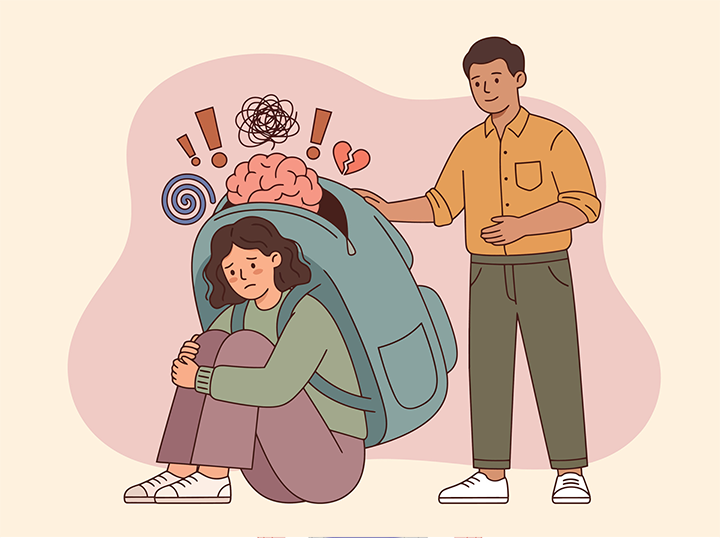
Anxiety in a relationship rarely stays confined to the person experiencing it. It shapes the dynamic between both partners — one person may become more anxious and pursuing, while the other becomes more avoidant and withdrawn, simply trying to keep the peace. Neither role is “wrong,” but the pattern itself can wear down both people over time.
People-Pleasing Can Be Anxiety Wearing a Different Mask
If your anxiety shows up less as visible worry and more as a constant effort to keep everyone comfortable, avoid disagreement, or anticipate your partner’s needs before they’ve said anything — that’s often anxiety too, just in a quieter form.
Why It Can Feel Worse at Night or During Downtime
Many people notice their relationship anxiety spikes specifically at night, or in quiet moments with a partner, rather than during the busyness of the day. That’s not a coincidence — the same reasons anxiety intensifies at night in general also apply here.
The Body Gets Involved Too
Relationship anxiety isn’t only mental — it can show up as a tight chest before a hard conversation, a stomach that drops when your partner’s name pops up on your phone, or physical restlessness after an unresolved disagreement.
What Helps
- Naming the pattern out loud, ideally with your partner, so it becomes something you’re both working with rather than a private struggle or an unspoken accusation.
- Building a pause before reacting — noticing “this is anxiety talking” before firing off a message or picking a fight.
- Getting curious instead of certain. Anxiety tells a very confident story about what a partner’s silence or tone means. It’s rarely as certain as it feels.
- Working with a therapist, either individually or as a couple, to understand where the anxiety originated and how it’s playing out in this specific relationship.
Anxiety in a relationship isn’t a sign that something is fundamentally wrong between you and your partner — often, it’s a sign of an old pattern showing up in a new place. With the right support, it’s absolutely something that can shift.